
Kate Neal’s A Book of Hours, presented at the Western Australian Academy of Performing Arts on the 16th of April 2025 transported the audience to a world drifting somewhere between an industrial Melbourne garage, the playroom of a Victorian child, the ballroom of Alexandre Le Riche de La Poupelinière, and the studio of Marcel Marceau as it traversed through musical landscapes in a genre-defying display of virtuosity. Performed by Melbourne’s Rubik’s Collective, comprising of Tamara Kohler (Flutes), Kaylie Melville (Percussion), Gemma Van Dyck (Cello), and Aidan Boase (Keyboards), the bespoke piece travelled through the 16th Century writing, “The Book of Hours,” a liturgical text structuring the day and prayers of the clergy.
Where many composers and artists gently straddle the line between disciplines and modalities, not wanting to stray too far away from the safety of their singular art form, composer Kate Neal obliterates the arbitrarily constructed divide between artistic and even non-artistic (e.g. the brushing of teeth) modes and practices. Featuring seamlessly integrated interplay between musical styles spanning 400 years, choreography, animation, an exploration of the mundane, and the monotony and excitement of a waking day, this work presented both the idiomatic and the idiosyncratic as it intertwined into its fabric the habits and rituals of each performer. In doing so, A Book of Hours perfectly embodies the idea of contemporary musical virtuosity described by fellow Melbourne-Based artists Louise Devenish and Cat Hope as it “finds compositional materials in individual performers and their experiences” and peddles “energy, not exclusivity”1. The effect is that the audience are not merely listeners but become active participants in the work unfolding before them. From this active participation emerges a sense of agency which ensnares audiences in the performance in a way the traditional sole modalities of classical music, for example, cannot.
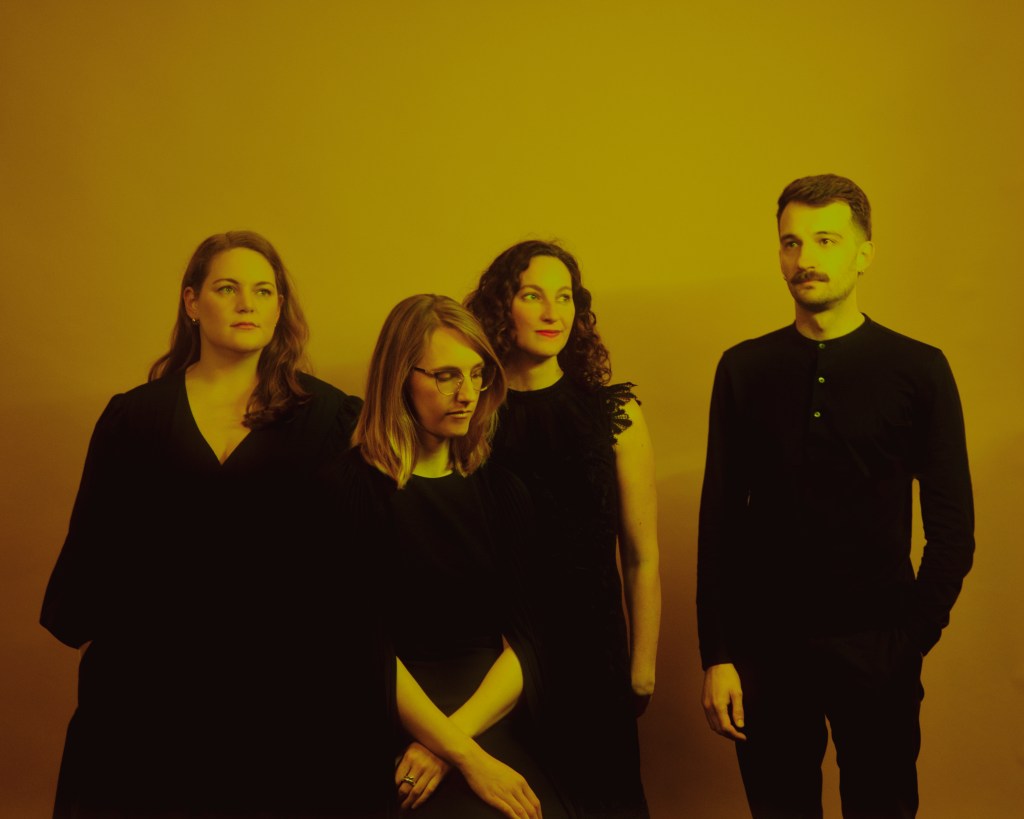
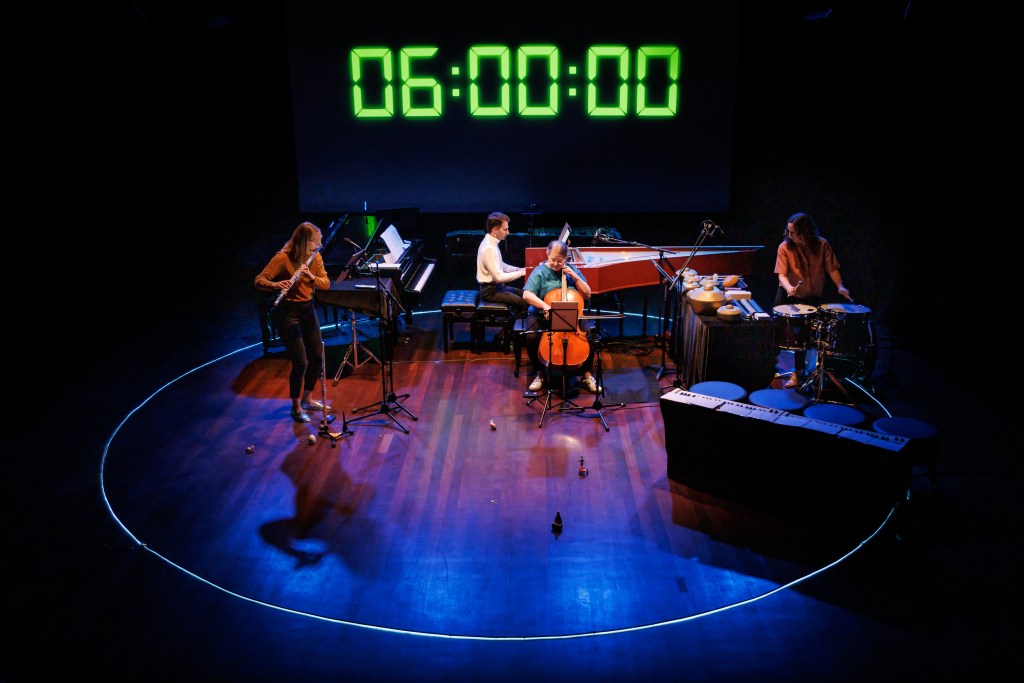
A work such as this, no matter how masterfully devised relies on the willingness and commitment brought to the stage by its performers. Rubiks collective could not have been a more fitting ensemble for this task, and it was evident in the individuality and expression of the performance that each part had been sculpted for and imprinted upon by its player. Keyboardist Aiden Boase and Cellist Gemma Van Dyck grounded the piece in a continuo-like team, befitting the work’s inclusion of musical material by baroque composers Couperin and Rameau. These performers demonstrated incredible virtuosity on their own instruments as well as a variety of others including other keyboards, toys, and toothbrushes. While this pair grounded the piece, Flautist Tamara Kohler and Percussionist Kaylie Melville displayed athleticism on their instruments and on the stage as they ran between instruments, spinning platforms, and each other, all while performing mime-like choreographic gestures. It was the small details of the performance, the minute gestures, the subtle costumes, and the ever so slightly changing and developing material that reinforced the audience’s ability to participate by constantly presenting something new no matter when or where they looked.
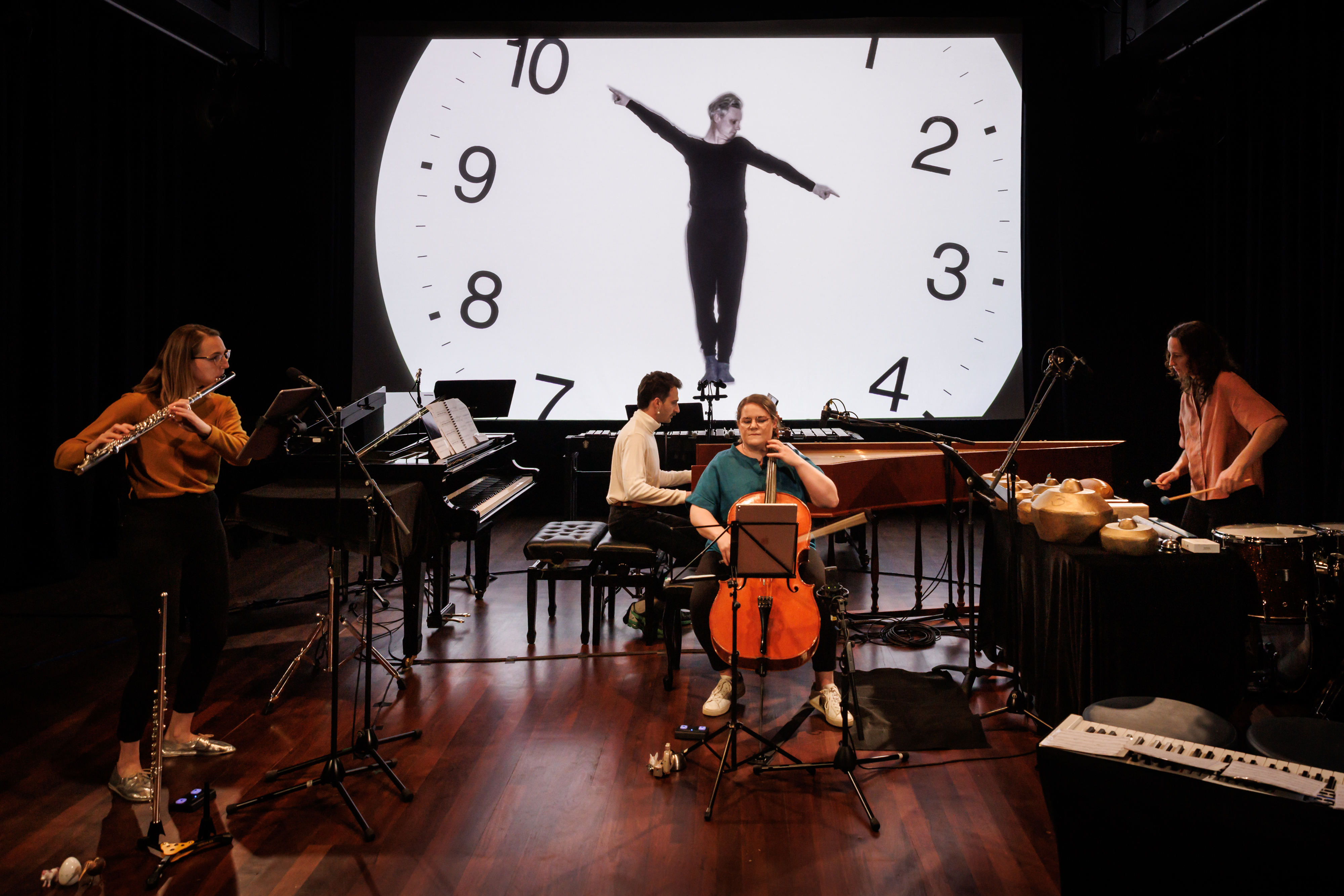
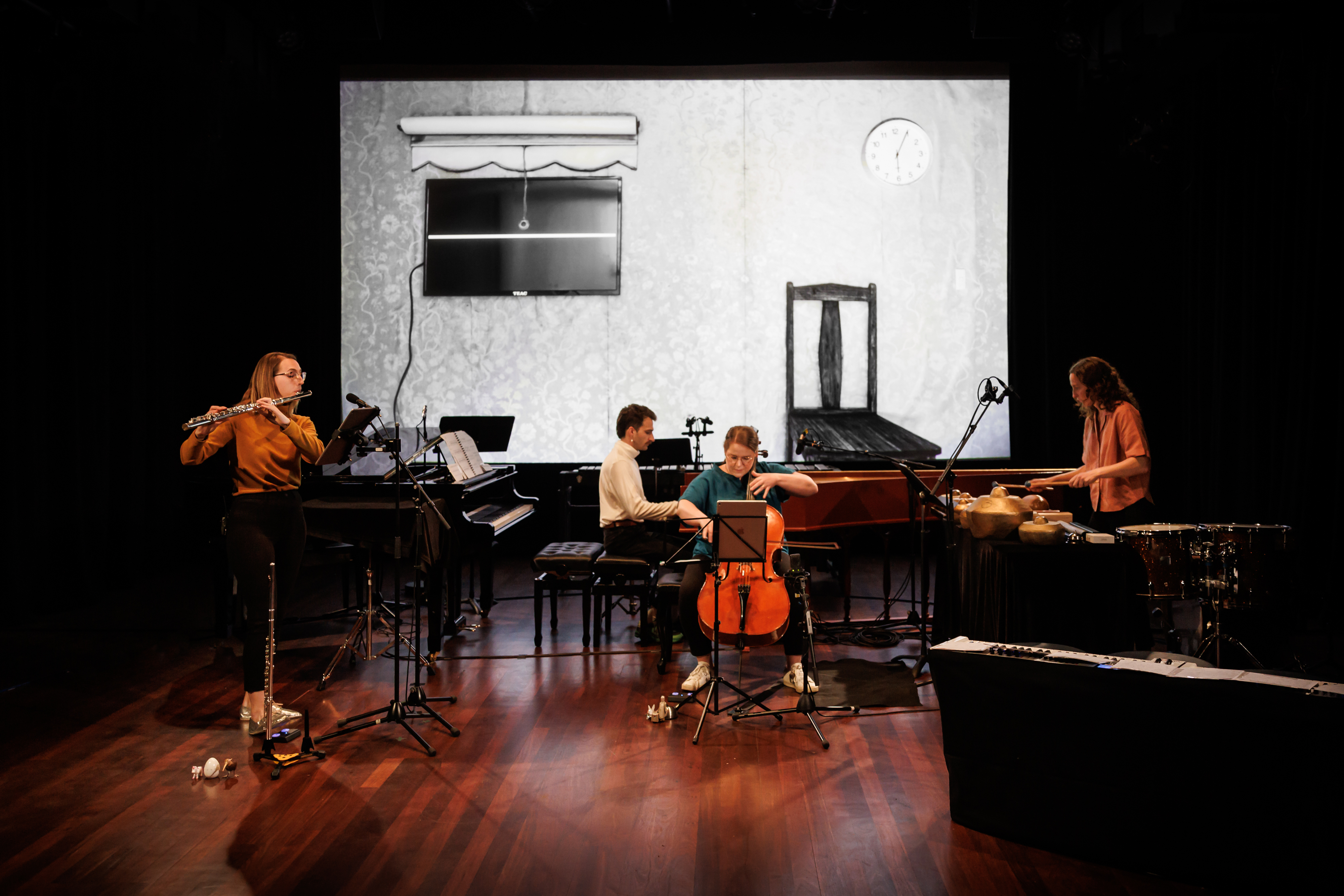
A key feature in this dynamic and detail-oriented performance was the stop motion animation created by visual artist Sal Cooper and choreographer Gerard Van Dyck. This mesmerising film ticked away behind the performers and presented the audience with the difficult choice of where to cast their gaze. With so much visual stimulation throughout the piece, the audience set off on a carnival ride oscillating between linearity, and a shifting temporality in which the audience were jerked forwards and backwards in time or stood perfectly still. Within the film, a focus on the minute mirrored the subtle but immensely expressive choreography of the performance and echoed the exploration of time in all its scales and subdivisions. Small details changed just as the eye caught something elsewhere and the viewer would always return to a scene which had changed ever so slightly from the last. As much this busyness and detail is a strength of the performance, it also presented the audience with the challenging decision of what elements they wanted to observe and which they would not get to see. I could happily watch this performance three or four times without tiring of finding new details, but can’t help that feel each time I viewed it, I would be missing out on those moments I had to concede in favour of others. This effect could have perhaps been mitigated by a more suitable space for the performance as while the Richard Gill Auditorium at WAAPA is sonically well designed for works such as these, the size, shape and busyness of its stage draws audiences away from the details and with limited lighting available, much of this unnecessary clutter remains illuminated. Despite this, I found myself trapped by the performance as Rubiks Collective connected intimately with the audience and the visual spectacle kept me engaged and away from a boredom which may have caused my attention to wander.
A Book of Hours is not just a masterclass in compositional and musical virtuosity, but a blueprint for collaborative practice across all disciplinary divides. It brings together the voices and practices of 7 distinct collaborators whose footprints can each be seen wandering through the piece and utilises each to amplify the others. The show now travels to the Canberra International Music Festival where it will be performed at the National Film and Sound Archive on the 3rd of May.
1 Devenish, L., & Hope, C. (Eds.). (2023). Contemporary Musical Virtuosities (1st ed.). Routledge. https://doi-org.ezproxy.ecu.edu.au/10.4324/9781003307969
 Darcy Lewis Music
Leave a comment